
Business


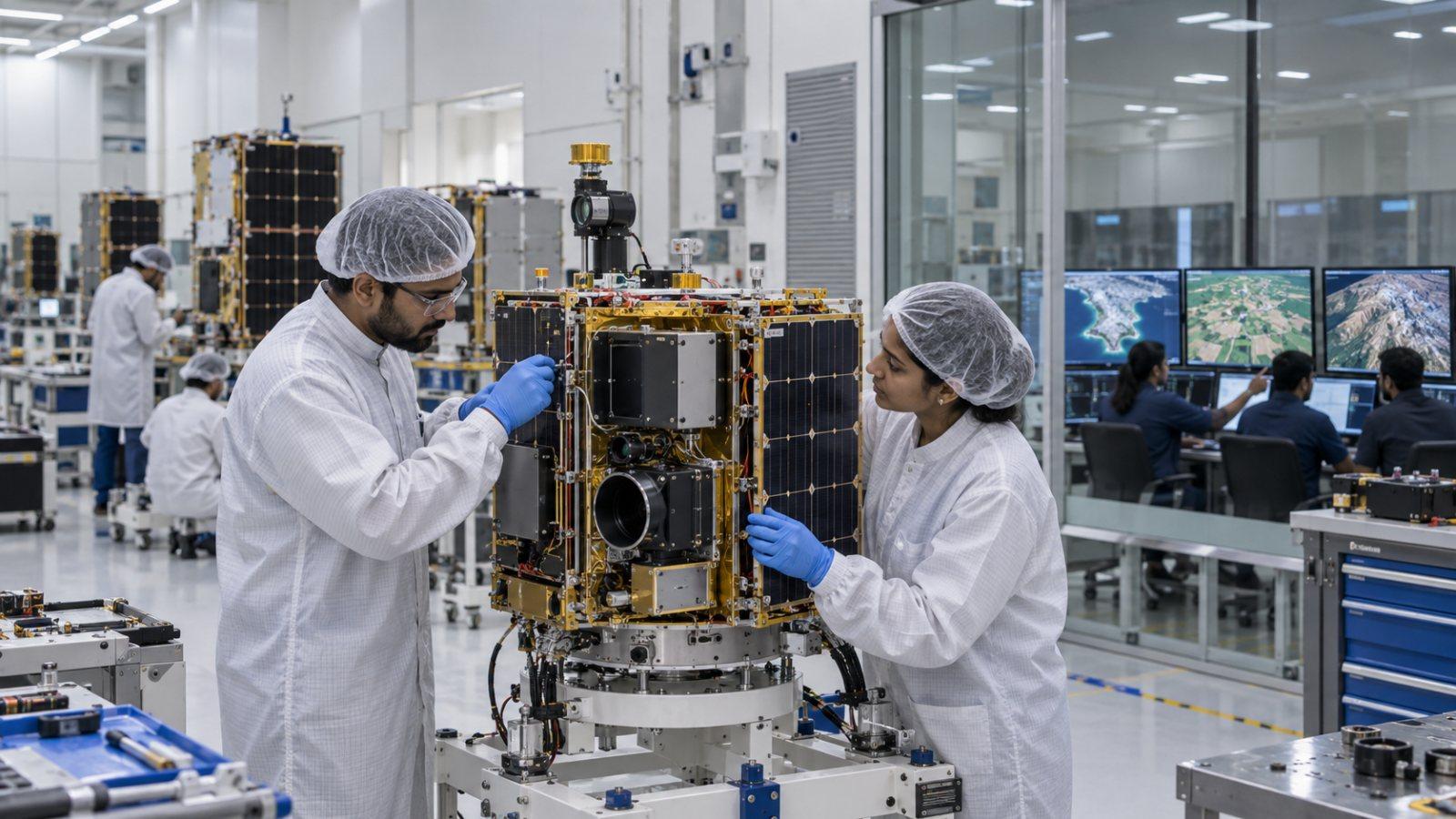
India’s space sector is expanding beyond rocket launches and satellite missions, with startups driving innovation in satellite manufacturing, communications, Earth observation, navigation and space-based data services. According to government figures cited in the report, the number of registered space-tech startups has grown from just one in 2014 to 440 by August this year. The Indian National Space Promotion and Authorisation Centre (IN-SPACe) has reportedly issued 113 authorisations to 52 private entities. By March 31, Indian space startups had attracted $618.5 million in investments, reflecting growing interest in companies moving from early-stage development to commercial operations. India’s space economy is currently valued at around $9 billion, and IN-SPACe has outlined a long-term strategy to expand it to $44 billion by 2033, including an export target of $11 billion. Communications is expected to remain the largest segment, followed by navigation and Earth observation, while satellite manufacturing, launch services and in-orbit operations are also poised for growth.
ISRO’s technological foundation has played a significant role in enabling private-sector participation. The space agency has conducted 136 spacecraft launches, 106 launch-vehicle missions and launched 434 foreign satellites, according to the figures provided. The government has also highlighted technology-transfer agreements covering 83 technologies developed jointly by ISRO and the Department of Space. Policy reforms introduced in 2020, followed by the Indian Space Policy 2023, opened more opportunities for private companies to develop satellites, launch vehicles and space-based services. IN-SPACe was established to promote and authorise non-governmental space activities, while reforms to foreign investment rules have helped attract capital. Hyderabad-based Skyroot Aerospace, Dhruva Space, TakeMe2Space, Pixxel and Agnikul are among the startups operating in this ecosystem. Satellite imagery combined with artificial intelligence can support agriculture, insurance, mining, infrastructure planning, disaster management and defence, while satellite communications and navigation can improve broadband access, transport and logistics. Experts say this model of combining public infrastructure and research with private investment and commercial innovation could offer lessons for sectors such as semiconductors, advanced manufacturing, defence technology and biotechnology.











Comments (0)
No comments yet
Be the first to comment!