
Shows


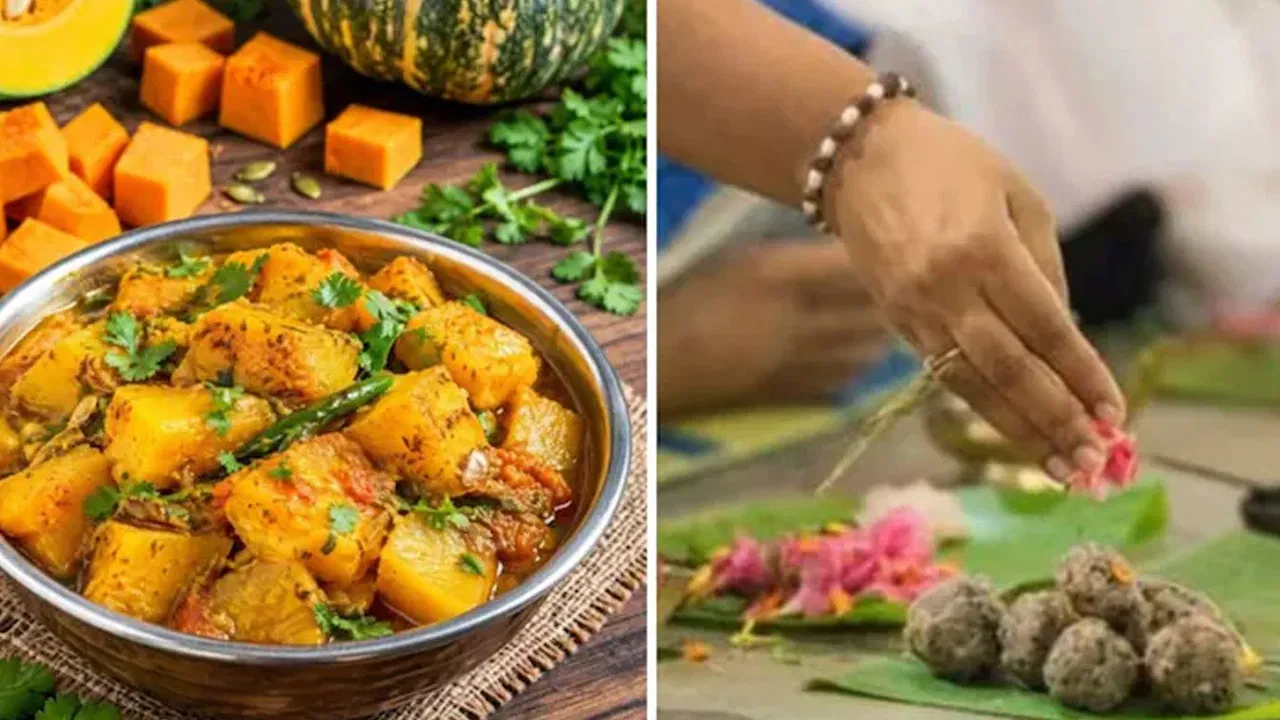
During Pitru Paksha, families traditionally perform rituals such as tarpanam, pindadanam and shraddha to honour and remember their ancestors. As part of the custom of serving a sattvic meal during shraddha ceremonies, pumpkin curry also holds a special place in several regions. Pumpkin, known as ‘Kashifal’ in some parts of India, is considered a sattvic vegetable and is therefore included in traditional shraddha meals. There is also a belief in some communities that offering pumpkin as part of the meal helps invoke the blessings of ancestors.
Another reason for its importance is its suitability for preparing simple sattvic dishes without onion and garlic. Traditional practitioners also associate pumpkin with various cultural and Ayurvedic significance. In some regional folk traditions, the pumpkin is considered symbolic of the eldest son in a family, leading to customs where a male family member breaks the pumpkin before it is cut and prepared. Such practices vary from region to region and continue as part of local traditions during Pitru Paksha.











Comments (0)
No comments yet
Be the first to comment!